Omne Trium Perfectum. Latin for “the rule of three” (Don’t worry, we had to look it up too). There are three basic movements your goalie needs to practice constantly to be the best they can be. So what are C-Cuts, Shuffles, and T-Pushes?
C-Cuts
These are the same movements that all skaters practice as they learn to skate, in which both skates remain in contact with the ice. An important aspect of goaltending is being able to move in any direction. Forwards and backwards c-cuts are equally crucial. If you enjoy reading the technical side of how to do a C-Cut, check out Laura Stamm’s article here. And if you’re a visual person, check out the few different videos below.
Now that we’ve seen the different types of C-Cuts, let’s talk about how they’re used.
– Isolated Leg C-Cuts are most often used in crease movements where your goalie needs to make a sharp turn off the post, or into the post, or to make a sharp angle t-push.
– Telescope C-Cuts are best used for quick movements to adjust depth, and again, do not have to be as exaggerated as in the video.
Ensure your goalie practices c-cuts in their crease to understand the different situations and ways they can be applicable. They’re most likely already doing the moves without realizing it.
Shuffles
Shuffles are most likely your goalie’s least favorite movement and most tiring. It’s one of the crucial movements of their feet that enable minor lateral adjustments as they follow the puck. It’s important to separate the upper body from the lower body during all these movements.
Luckily, there’s only one kind of shuffle, and it’s fairly easy to explain. Imagine your goalie is using their inside edge to scrape up ice with their skate to make a snowball. But instead of being stationary, they move in the direction of the push. That leg scraping the snow is your goalie’s lead leg. The driving leg generates the power to push in that direction.
It’s important for your goalie to feel that difference moving to the left and to the right. They should load power into the driving leg and ever so slightly lift the lead leg/foot off the ice to minimize resistance. These are normally subtle movements laterally, so it’s important to remind your goalie to regain equal power on both feet as soon as possible with each shuffle.
So now you’ve seen C-Cuts, which are great for adjusting depth and cutting down the angle. Shuffles are best used for minor angle adjustments and to ensure your goalie is square to the puck. Now it’s time to discuss what movement to use for those cross-ice passes and potential one-timers when a shuffle won’t cut it.
T-Push
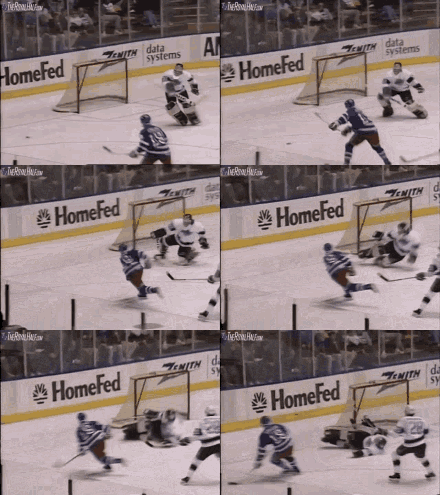
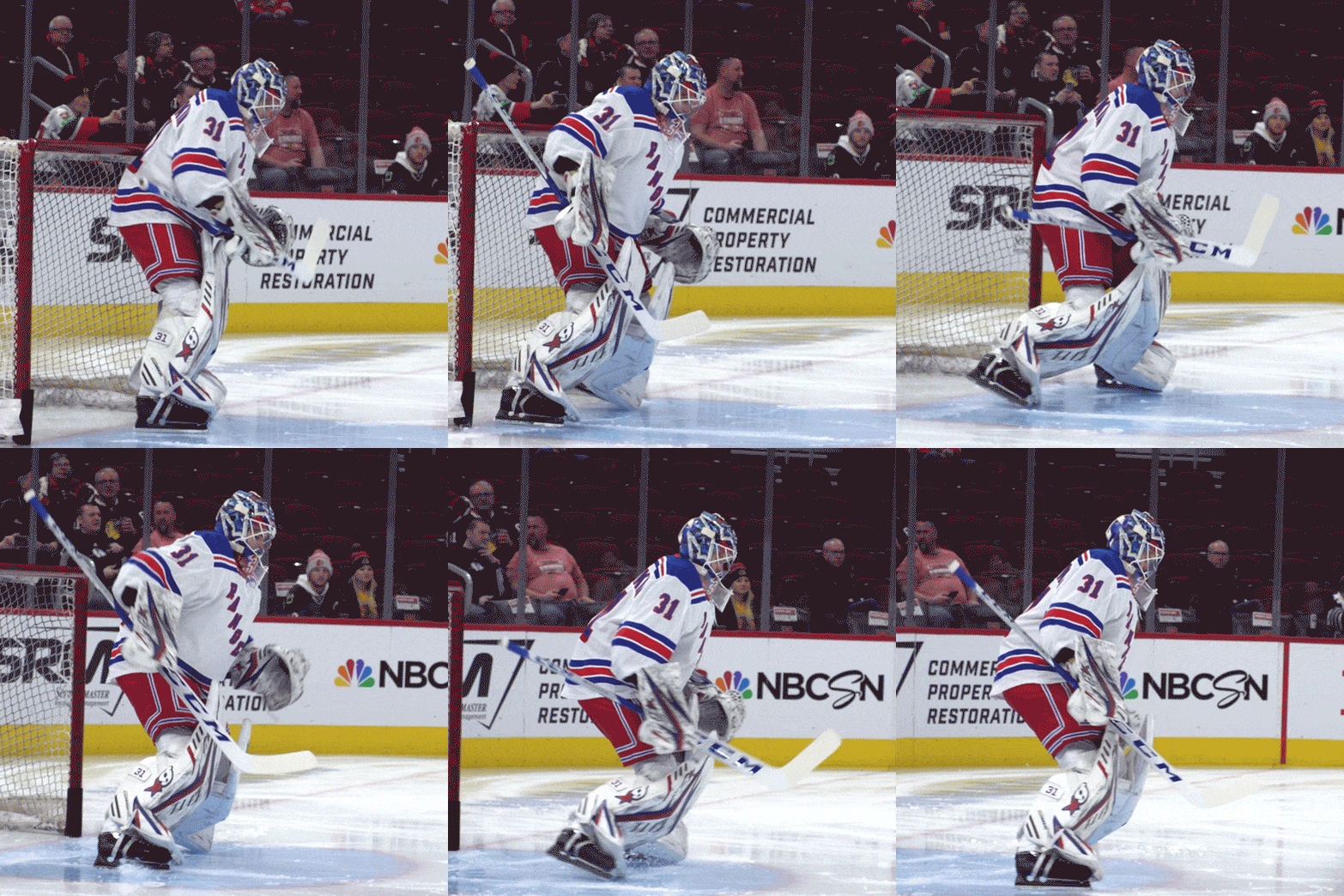
The third of the 3 types of movements for your goalie. The t-push. Probably the trickiest to get working smoothly for your goalie. T-pushes are the best movement where a shuffle can’t cover the distance, and your goalie still has the opportunity to arrive on their feet.
From a technical skating standpoint, the t-push is where the lead leg turns outward, pointing in the direction of travel your goalie wants to move. It forms a “T” with the other skate of the driving leg. That driving leg is loaded, and using that built-up power, your goalie will push in that direction of travel. Once at the appropriate position, your goalie will make a good hockey stop with that lead leg, snapping the pad back into the stance. Remember, the upper body remains independent of the lower body. Head and hands follow the puck.
We’ve now covered all 3 movements your goalie will use on their feet. There are various drills you can do that combine these movements, allowing your goalie to explore using them to get around the crease in different ways. While they experiment with these movements and/or continue to practice them, here’s a few key aspects to focus on:
3 Body Movements in Order:
1. Head turns to the puck first.
2. Hands and shoulders move second to face the puck
3. Legs move third, completing the movement.
Always remember, head, hands, feet.
3 Positional Movements in Order:
1. Square to the puck first (Head and hands)
2. Move to the correct angle (feet will get you there)
3. Then adjust the depth as necessary
Square, Angle, Depth.
A lot of information was covered in this post. It’s important to understand these movements, as the best goaltenders are the strongest skaters. You may need to revisit this post periodically to refresh. Review other videos, but be cautious; some demonstrate poor form in the movements. Remember the Body and Positional Movement Rules. Feel free to leave any comments or questions you have! Thanks for reading.
 maxhockeycoaching.com
Leave a comment